

How to Get Your Free Credit Score
Where to check your credit score for free, why scores can differ, and what to do after you see your number.

You can check your credit score for free through some banks, card issuers, or credit services. Checking your own score is a soft inquiry and won’t lower it. CreditVana’s free plan shows a VantageScore 3.0 based on Experian data after you verify your identity.
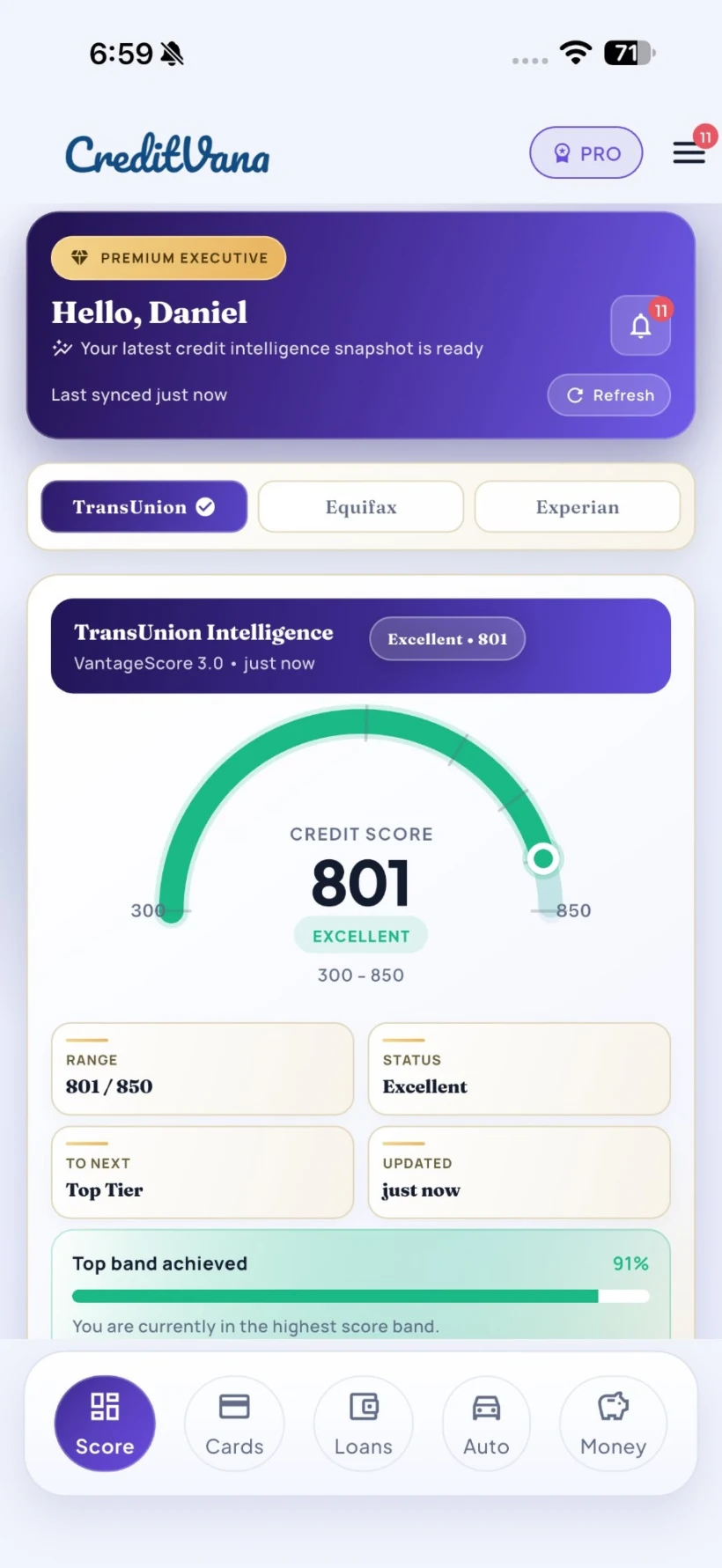
How to check your free credit score with CreditVana
- Download CreditVana on iPhone or Android and create a free account.
- Verify your identity in the app so CreditVana can match you to your credit file.
- Open your score dashboard to see your Experian-based VantageScore 3.0 and the factors that affect it.
You can check your score without a credit card or paid subscription. The score dashboard shows the date associated with your score.
Where can you check your credit score for free?
- Your bank or card issuer. Sign in and look for a credit score or credit monitoring feature. Check the bureau, scoring model, and date shown next to the score.
- A free credit score service. Check which bureau and scoring model the free plan uses, how often the score updates, and which features cost extra.
- A lender’s notice. If a lender used your score to deny your application, the notice may include the score it used. Check the date before comparing it with a more recent score.
The Consumer Financial Protection Bureau lists more places to get a score, including nonprofit credit counselors who may be able to share one during a session. If you’re comparing a free service with a paid plan, check which bureau each plan covers. CreditVana includes the Experian-based score for free and offers three-bureau access as a paid upgrade.
Why can your credit scores differ?
Your score can vary with the bureau data, scoring model, and date used to calculate it. A VantageScore 3.0 based on your Experian report can differ from a FICO Score 8 based on that same report. Scores can also differ between bureaus because lenders report account updates on different schedules.
To follow changes over time, compare scores from the same bureau and model. A lender may use a different model or bureau when it reviews your application. CreditVana’s paid plans let you compare scores based on reports from Experian, Equifax, and TransUnion. Read VantageScore’s explanation of score differences.
What’s the difference between a credit score and a credit report?
A score summarizes credit risk as a number. A report is the record behind it. It shows details such as accounts, balances, payment history, and inquiries. Use the score to follow a trend and the report to investigate a change or an account you don’t recognize.

You can get a free online report from each of the three nationwide credit bureaus every week through AnnualCreditReport.com. The free reports generally don’t include scores. Read our complete guide to checking your free credit report from all three bureaus or review the FTC’s guidance on requesting them.
What should you do after checking your score?
- Record the details. Note the score, bureau, scoring model, and date so you can make a meaningful comparison next time.
- Review a change in context. If the same score model shows a drop, check for a higher reported balance, a missed payment, a new account, or another recent change.
- Look for errors. If something in the report is inaccurate, follow the CFPB’s steps for disputing a credit report error.
You can check your own credit again without hurting your score. Applying for a loan or credit card can lead to a hard inquiry, which can affect it. See how the CFPB explains soft and hard inquiries.